How Superintendents Really Decide to Cancel School
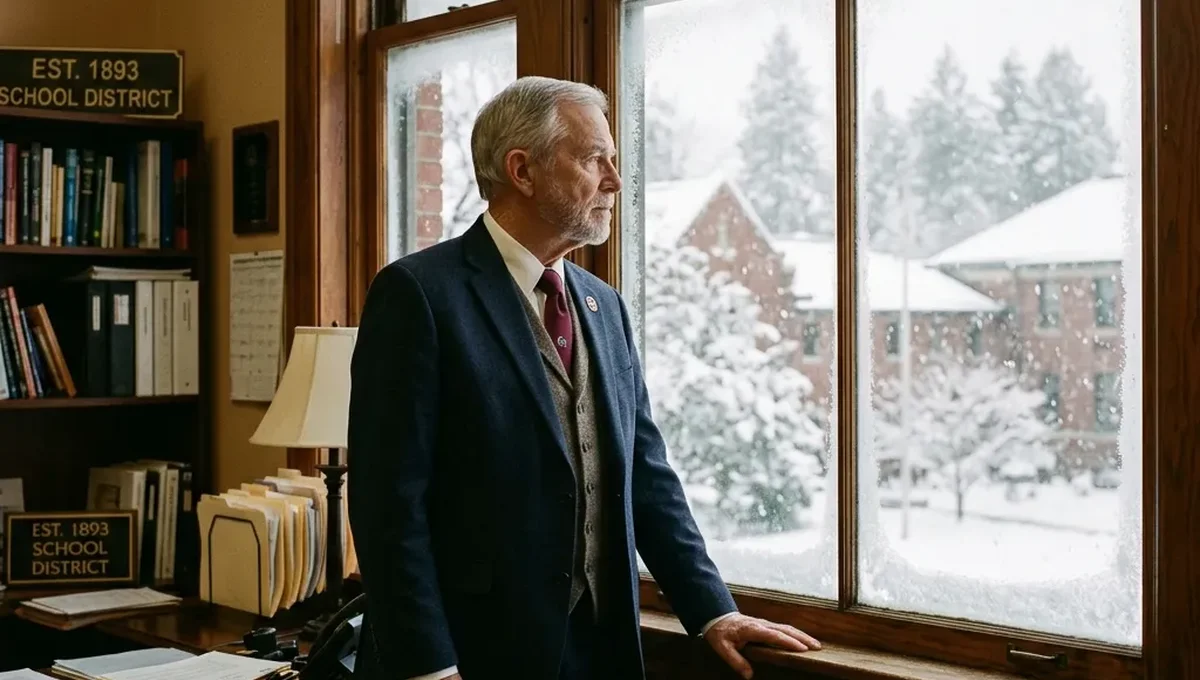
It's not just about snow totals. We break down the official decision matrix most districts use — and the unspoken factors that influence the 4 AM call.
Every winter morning, millions of students wake up and immediately check their phones, hoping to see the magical words: "School Closed." But behind that decision is a surprisingly complex process that begins hours before dawn — one that most people never see.
The 4 AM Decision Window
Most superintendents make the call between 4:00 and 5:30 AM. Why so early? School buses need at least 90 minutes of prep time, cafeteria staff must be notified, substitute teachers need to be arranged, and parents need time to organize childcare. The decision point is almost always before first light — meaning the superintendent is making a high-stakes call based on forecasts, not direct observation.
By the time conditions are bad enough to see clearly, it's already too late to cancel school safely. Superintendents must forecast the forecast — predicting how bad roads will be 3–5 hours from now.
The Official Decision Matrix
Most districts use a structured checklist. While the exact thresholds vary by region and climate, the core factors are remarkably consistent across North America:
| Factor | Threshold (Typical) | Weight |
|---|---|---|
| Snowfall Accumulation | 4–6 inches (varies by region) | High |
| Road Conditions | Untreated secondary roads | Critical |
| Temperature / Wind Chill | Below -10°F wind chill | High |
| Freezing Rain / Ice | Any accumulation | Critical |
| Visibility | Below 0.25 miles | High |
| Bus Route Accessibility | Rural routes impassable | Critical |
The Road Condition Call
The single most important factor is almost always bus route safety. Most districts have transportation supervisors who physically drive key routes before 4 AM. They radio back conditions in real time. A superintendent in suburban Ohio may handle 10 inches of snow easily — but one inch of ice on rural township roads can shut down the whole district.
Why Rural Districts Close More Often
Urban districts benefit from municipal road crews that run 24/7 on major arteries. Rural districts depend on county and township roads that may only get one plow pass every 6 hours. A storm that merely delays an urban district can force a full closure for the rural district next door.
The Unspoken Factors
Beyond the official matrix, several informal pressures influence the decision:
- Neighboring district decisions: Superintendents watch each other. If three neighboring districts close, it creates social and political pressure to follow suit — even if local conditions are slightly better.
- Forecast uncertainty: A predicted 3-inch storm feels manageable; a storm with a 2–8 inch range feels dangerous. Wide forecast uncertainty pushes superintendents toward closure.
- Prior year liability: Districts that kept schools open during a bad storm — especially if accidents occurred — become significantly more risk-averse in future decisions.
- Time of storm arrival: A storm arriving at 3 AM is much more likely to trigger closure than one arriving at noon. The accumulation window before school start matters enormously.
- Makeup day pressure: Late in the school year, with few makeup days left in the calendar, superintendents feel more pressure to stay open. Early winter storms trigger closures more easily.
The 2-Hour Delay Option
A 2-hour delay is the superintendent's pressure-release valve. It buys time for road crews to treat secondary roads, for daylight to improve visibility, and for the storm to pass or intensify. Many administrators use a personal rule: if conditions are borderline, a delay is called. If conditions are clearly dangerous, it's a full closure.
A 2-hour delay eliminates the most dangerous pre-dawn drive window and gives road crews 120 extra minutes to treat surfaces. For moderate storms, this can make the difference between a safe and unsafe commute.
How Our Predictor Models This
Our Snow Day Predictor is trained on exactly these real-world decision patterns. We don't just look at raw snowfall totals — we weight storm timing, temperature trends, ice probability, and regional baseline thresholds to model how a superintendent in your specific area is likely to respond. The result is a probability score that reflects the full complexity of the actual decision process.
See Your Snow Day Probability ❄️
Enter your ZIP code to see a real-time probability score based on the same factors superintendents use — for free, instantly.
Predict My Snow Day Now